
 The Annamanaṭa Mahadēva Temple is situated in Annamanaṭa desom (village), which falls under the Annamanaṭa Panchayat in Mukundapuram Taluk of Thriśśūr District. Specifically located in Kallūr Thekkummuri village, the temple is ten kilometers South of Chālakudy on the Māḷa route, and approximately five kilometers from Māḷa town itself. This area was historically part of the ancient Adoor grama (settlement) believed to have been established by the sage Paraśurāma.
Although the primary road access is from the west, the temple faces east. Upon entering through the eastern naṭa (gateway), visitors encounter a strikingly low valia balikkal positioned directly in front of the agra-maṇṭapam. Typically, the height of the principal balipīṭha matches the height of the adhishṭhāna (base) of the śrīkōvil. However, here, only the uppermost layer, the padma-pīṭha, extends beyond the base to a height equivalent to the jagathy of the adhishṭhāna.
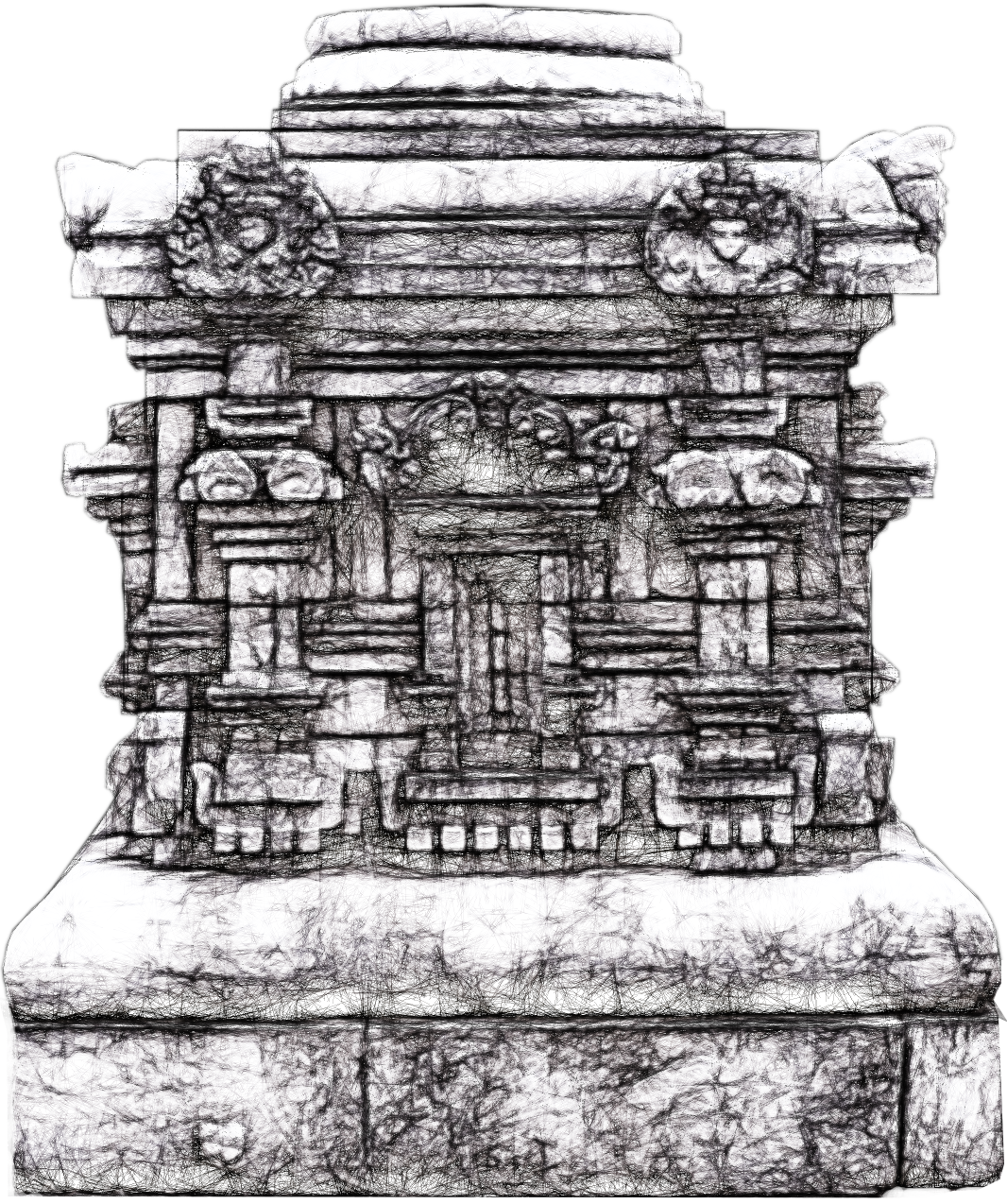
 Beyond the balikkal, one enters the open agra-maṇṭapa and then proceeds through the valiambalam into the inner courtyard of the temple. Notably, there is no namaskāra-maṇṭapa in front of the śrīkōvil. A sōpana with curved hasta-hasti banisters on either side provides access to the square mukha-maṇṭapa. The sanctum itself is also square. Both the śrīkōvil and the mukha-maṇṭapa are constructed of granite up to the vēdika. Above this, the śrīkōvil is built with laterite stone, plastered, and adorned with panjaras and plain rectangular vertical niches interspersed between them. The ghana-dwāras (false doors) on the south and west house the pratishṭhas (deities) of Ganapathy and Pārvathy, respectively. These ghana-dwāras are decorated with tōranas. Below the northern ghana-dwāra, a granite pranāḷa supported by a dwarf figure is visible. The sanctum contains a Śiva-linga nearly four feet tall, believed to represent Kirātamurti in a benevolent mood while bestowing the Pāsupatāstra upon Arjuna. The mukha-maṇṭapa in front is enclosed on its three outer sides by horizontal wooden slats fixed to outwardly sloping carved wooden frames. The upper walls of the mukha-maṇṭapa feature intricately carved wood paneling. Both the sanctum and the adjoining mukha-maṇṭapa are two-tiered (dvi-tala) structures, covered with copper sheets. The upper eaves are supported by freestanding carved wooden figures placed at intervals, and the roofs are punctuated and decorated with śuka-nāsas.
Two thiṭappaḷḷis (kitchen) form part of the nālambalam on either side of the main sanctum. A door in the northern nālambalam, opposite the pṛanāla, leads to an enclosure housing the circular single-tiered (eka-tala) śrīkōvil dedicated to Vishṇu, with a square namaskāra-maṇṭapa in front supporting a pyramidal roof. Both these structures have tiled roofs. The viḷakkumādam structure encloses the nālambalam of the Śiva shrine and the Vishṇu enclosure on its northern side, along the outer periphery. The independent gabled roofs of the two valiambalams present distinct mukhappus for the two main shrines. Notably, the roof of the Śiva's valiambalam extends forward over the agra-maṇṭapa, emphasizing its primary status.
In front of the agra-maṇṭapa lies the distinctive valia-balikkal. Beyond this, on the eastern side, is the ānapandal with a tiled roof and the dhwaja-stambha piercing through the roof. Within the outer bali-vaṭṭam are the Śastha shrine, facing west on the southern side of the nālambalam, and the Gopāla Kṛshna shrine, adjoining the western boundary wall in the southwest corner.
 The tank and the ūṭṭupura are located in the northeast corner of the outer courtyard. The courtyard is enclosed by a tall compound wall with openings in the four cardinal directions. The eastern and western nadas are adorned with dwāragōpuras featuring two-tiered (dvi-tala) tiled roofs and carved ceilings.
Outside the eastern dwāra-gōpura, on its south, is the Mahākāli shrine, and to the northeast are the shrines of Nāgarāja, Durga mounted on a lion, Narasimha, and Kṛshna, with a large tank situated between them. The Annamanaṭa River flows by the eastern facade at a distance of approximately 500 meters, where the Arathi of the deity takes place on the final day of the annual festival. The Devaswom office is located on the western nada, beyond the dwāra-gōpuram on the northwest side. The main access to the temple is from the west, and the distance to the Chālakudy-Māḷa bus route is about 200 meters.
Being one of the thirty-two grāma kshetras along the Kēraḷa coast, the core of the temple dates back at least 1200 years.
Historically, the temple was administered by about 10 or 12 Nambūthiri Illams (Brāhmin families) who were the traditional Urāymas (trustees) of the temple. Subsequently, by the mid-18th century, the melkōyma (overlordship) was seized by the Zāmōrin of Kōzhikkōde. Cochin (within whose territory the temple was located) successfully allied with Trāvancōre to expel the Zāmōrin from the temple's overlordship. The Nambūthiris of the grāmasanketham, who were displeased with Cochin's overall administration, surrendered the melkōyma rights of the temple to the Trāvancōre rulers. Trāvancōre claimed and exercised sovereignty over the temple for about a century. The Cochin rulers then approached the British East India Company to mediate their dispute with Trāvancōre regarding the temple's melkōyma. By 1814-15, the East India Company, intervening in the affairs of the princely states, ruled that Cochin held sovereign rights over the Adoor Grāma and the Annamanaṭa temple, but conceded certain rights to the Trāvancōre state. Later, recognizing the difficulty of exercising these special rights in a foreign territory, Trāvancōre also relinquished these rights to the Cochin ruler in 1902. Currently, the temple is administered by the Cochin Devaswom Board.
The temple was once richly endowed with an ānnual pāttom (levy) of 64,000 parās (a unit of measurement) of paddy, and the daily agram (offering of cooked rice) amounted to 10 parās of rice. The Annamanaṭa Mahadēva Temple is considered a Mahā Kshetra. It possesses all five pancha prākaras (five enclosures) and their constituent parts. The daily routine includes five pūjas and three śri-balis.
Highlights:
- The unusually low valia balikkal, as mentioned earlier, presents an intriguing anomaly.
- The customary namaskāra-maṇṭapa in front of the main sanctum is conspicuously absent.
- The mukha-maṇṭapam with its wooden slat enclosure lacks the usual dwāra-pālaka sculptures.
- The intricate wood carvings in the śrīkōvil and mukha-maṇṭapam, as well as those on the ceilings of the two dwāra-gōpurams, are particularly noteworthy.
- The temple has also contributed to the promotion of Kūthu and Kūdiyāttam.
- Among the 18 traditional Chākkiār families of Kēraḷa, the Mekkātt family originally resided near the Annamanaṭa temple and were the local performers (sthānis) there. Later, this family, along with two other families (Valia Parisha of Ambalapuzha and Cheria Parisha of Kidangūr), merged with the Kazhakkottam Chākkyārs. Cheria Parisha Paramēswara Chākkyār is credited with formulating the Mantrānkom Kūthu of Bhāsa in its current format at the Annamanaṭa temple in the latter half of the 19th century. The Mantrānkom Kūthu and Kūdiyāttam performances used to last for 41 days during the Mandala Kāla starting from the 1st of Vṛśchigam (November-December). In the absence of a Kūthambalam, the valiambalam served as the venue for staging these plays. The Annamanaṭa temple is one of only two temples in Kēraḷa where such marathon performances of Kūthu were traditionally held in the Valiambalam in front of the main shrine.
- Longstanding disputes about the overloadship of the temple between the Cochin and Trāvancōre principalities was adjudicated by the British Administration.
Reference:
- Census of India, Special Studies, Kēraḷa:, Temples of Tṛśśoor District - S. Jayashanker, Directorate of Census Operations, Kēraḷa, Thiruvananthapuram
- Keralathile Sthala Charithrangal - V. V. K. Valath, Thrissur District, Kerala Sahitya Academy, Thrissur
- Kshetra Vijñāna Kosham, Rajendran P. G., D. C. Books, Kottayam, 2000
- The Sucindram Temple - K. K. Pillai, Kalakshetra Publications, Adayar, Madras, 1953


