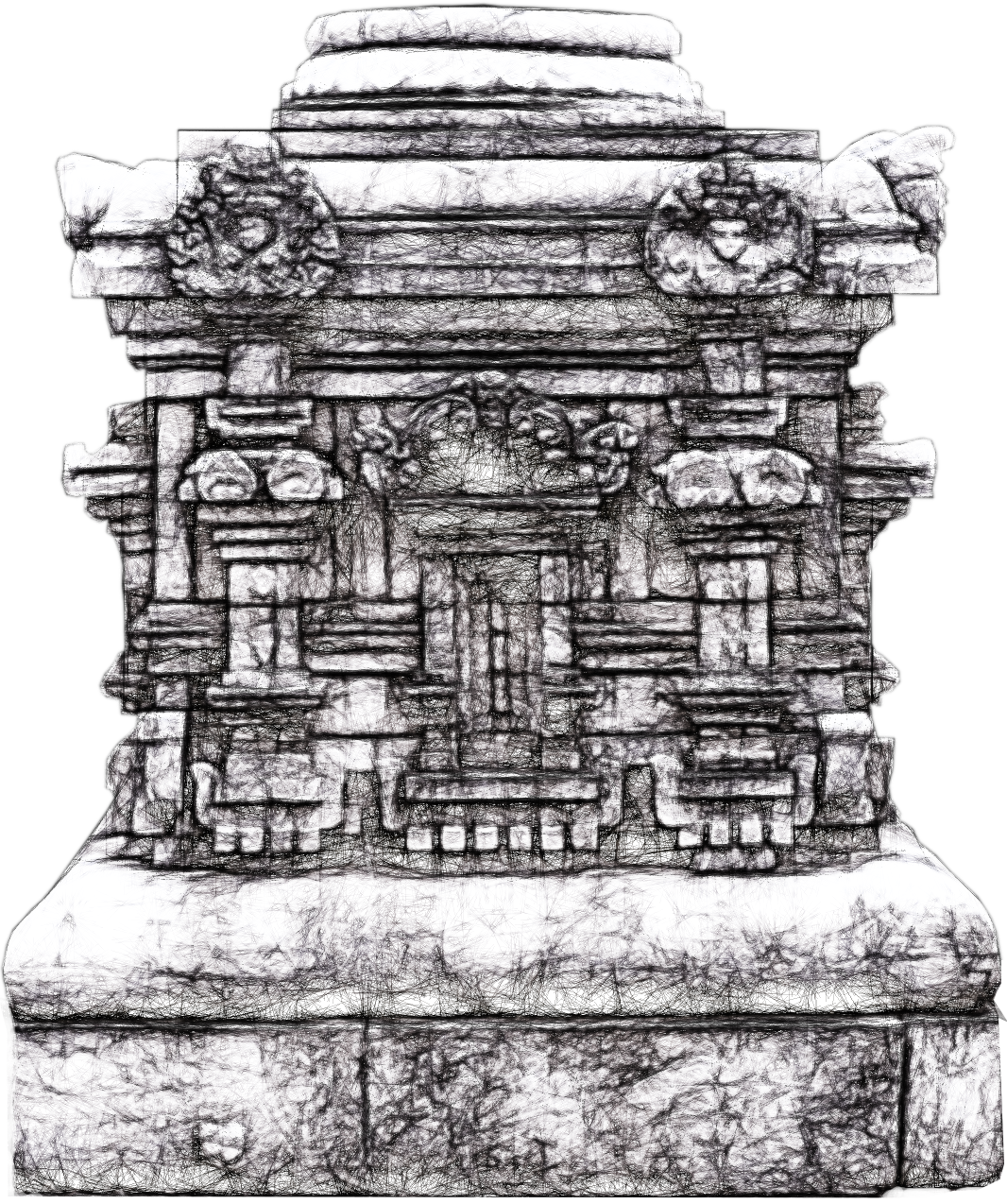

 Situated in Pūtāḍi village of Sulthān Bathery Taluk in Wayanād District at a distance of 30 km from Kalpetta District Head Quarters in the north-west direction. The Vēliyambam kōtta temple is inside the reserve forest area, on an elevated plateau. The śrīkōvil structure has the unique distinction of being the earliest extant structural temple in Malanādu (Kērala Coast). It is also the earliest gajaprshṭha śrīkōvil in this region.
The Pūtāḍi Tāḷakkāvu lithic inscription (Annual of Report of Epigraphy for 1970-71 No. B 64) obtained from this locality records the setting apart of certain lands for offerings in the temple and the decision was taken by Nālpatteṇṇāyiravar in the 137th year of Tirukkuṇavāy. The order further records that anyone who obstructs this would be considered as offenders against Tirukkuṇavāy. The temple to which the offering arrangement was made is not identifiable. According to M. G. S. Narayanan, Historian, the stone slab with inscription was "originally buried in the ground near Jain Basati". The slab was "discovered by K. K. N. Kurup, student in the Department of History, Calicut University, in 1970, . . . ". Further he remarks that "This record reveals that Tirukkuṇavāy was the model of Jain temples in Kerala and suggests that Tirukkuṇavāy was founded in the early part of the 8th century." The stone containing the inscription was removed by the Archaeological Department from this temple in 1970 and it is now displayed in the Archaeological Museum at Krishnapuram Palace, Kāyamkulam. Tirukkuṇavāy temple lingers only in epigraphs and memory as it has been totally destroyed by the Chola army in their war against the Cēras. Only the place name Mathilakam (near Kodungallūr) has survived.
The Pūtāḍi Tāḷakkāvu inscription does not help one to directly date the Vēliyambam kōtta temple but it can safely be assumed to be of earlier existence. This temple has its mate in the 7th Century Sahadēva Ratha in Māmmallapuram near Chennai. The early Pallava Kings were Jains. Pūtāḍi and Tirukkuṇavāy were early Jain settlemetns in Malanādu. There is every possibility of Vēliyambam kōtta temple taking shape as a Jain temple around 7th Century. The close similarity of Vēliyambam kōtta temple with that of the 7th Century Sahadēva Ratha in Māmallapuram is also accounted for by the reference to the master builder of Sahadēva Ratha, the Cēra Stapathi Māthrudatta who was commissioned by the Pallava ruler for the Māmallapuram project. This fact has been mentioned in the 'Avanti Sundari Katha' penned by Dandi, a poet in the Pallava court in the 7th Century.
It may be mentioned that the earliest gajaprshṭha śrīkōvil in present day Tamil Nādu is the one at Peṇṇaḍam, 17 km south-east of Vṛddhāchalam. This Śiva temple is extolled by Śaiva saint Appar (Tirunāvukkaraśar) as Thūngānai mādom (gajaprshṭha temple) in his Thevaram hymns. Appar also lived in the 7th Century.
The gajaprshta (apsidal) eka thala śrīkōvil having mukha-maṇṭapa faces west.
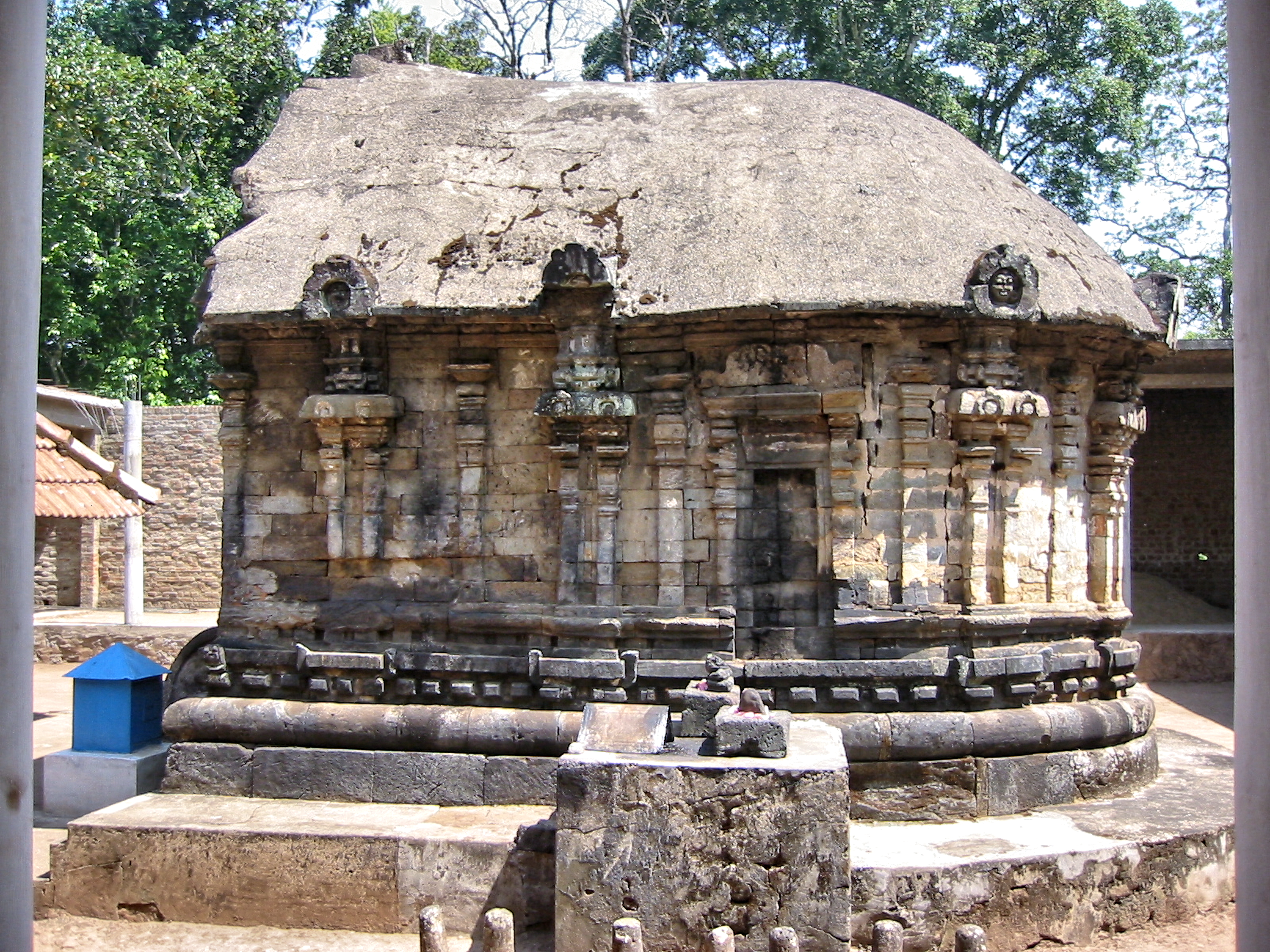 The adhishṭhāna is built with granite stones and with usual moulding. The granite sōpanam has four direct steps with banisters on either side with carvings of vyāli figures on the exterior. The pranāḷa on the northern side is of the simplified type with a granite piṭham beneath it. The walls and roof are made veṇṇakkal (alabaster). The exterior of the wall portion have been simply relieved by pilasters, niches and ghana-dvāras. There are three ghana-dvāras, two on either side and one at the rear. There are ten projecting niches from the bottom line of the roof containing ascetic figures of monks (which point to the Jain connection of the structure). The roof is also made of alabaster plastered over with lime. The small namaskāra-maṇṭapa has four pillars and a pyramidal tiled roof. On the southern side of the śrīkōvil and attached to it there is a small sub-shrine (without roof) having deities of Lord Gaṇapathy and Śāstha. The Māthru Śila can also be seen on the southern side beneath this small shrine.
Reference:
- Perumals of Kerala by M. G. S. Narayanan, CosmoBooks, Thrissur, Kerala, India


