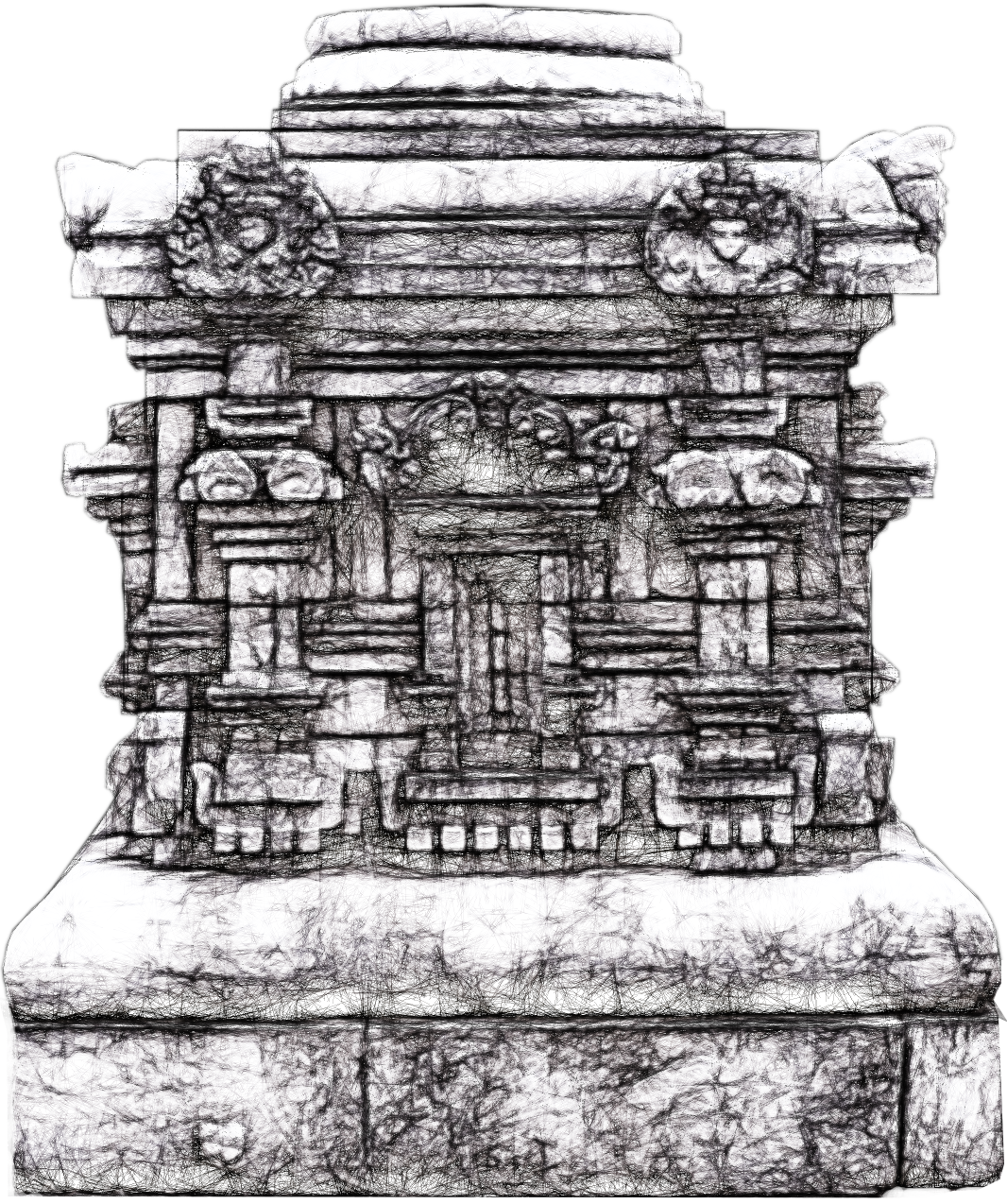
Trivikramangalam Maha Vishṇu Temple, located in Thiruvananthapuram city, Thiruvananthapuram district, can be reached by travelling on the East Fort-Thamalam route, branching from East Fort-Poojappura road at Kunjalummood junction. It is approximately 6 km from East Fort and about 100 meters from the Trivikramangalam bus stop.
This is one of the few temples which do not boast of a legendary import, even though the temple is dated around twelfth century. The temple is on the banks of the Karamana river at a good elevation. Eastern boundary of the temple compound is a high retaining wall overlooking the river with a series of steps to reach the river.
The śrikōvil is a square two storeyed structure with a mukhamantapa wchich too is a two storeyed structure. The adhishṭhāna is made of granite, featuring the usual panchavarga mouldings like Upāna, Jagathy etc. The superstructure wall is constructed of what is locally known as Vennakkal, a kind of soft gravel like stone, pinkish-white in colour, similar to alabaster. The lower portion of the superstructure wall is decorated with Kuḍya-stambhas, Panjaras, and Tōranas as natural stonework. There are dummy doors on three sides, crafted in stone.
 The praṇāḷa on the north side is a plain one issuing out of a simha mukha supported by a seated dwarf on the parapet wall of the tank below. There is a sixteen pillared namaskāra maṇḍapa in front of the śrikōvil.The middle four pillars of the maṇḍapa are of the fluted variety. Maṇḍapa ceiling is plain with crisscrossing beams and planks.
The śrikōvil sōpānam is very interesting. Sōpāna has got a lateral entry from two sides with sculptured bas reliefs of dance sequences. The dvārapālakas with mace in hand, on either side of entry to śrikōvil are tall and graceful figures. The Dhwajam & the Balikkal are in the open outside the nālampalam.
The temple is a protected monument under the State Archaeological Department.
The temple was first photographed between 1995 and 2000, and again in 2005.