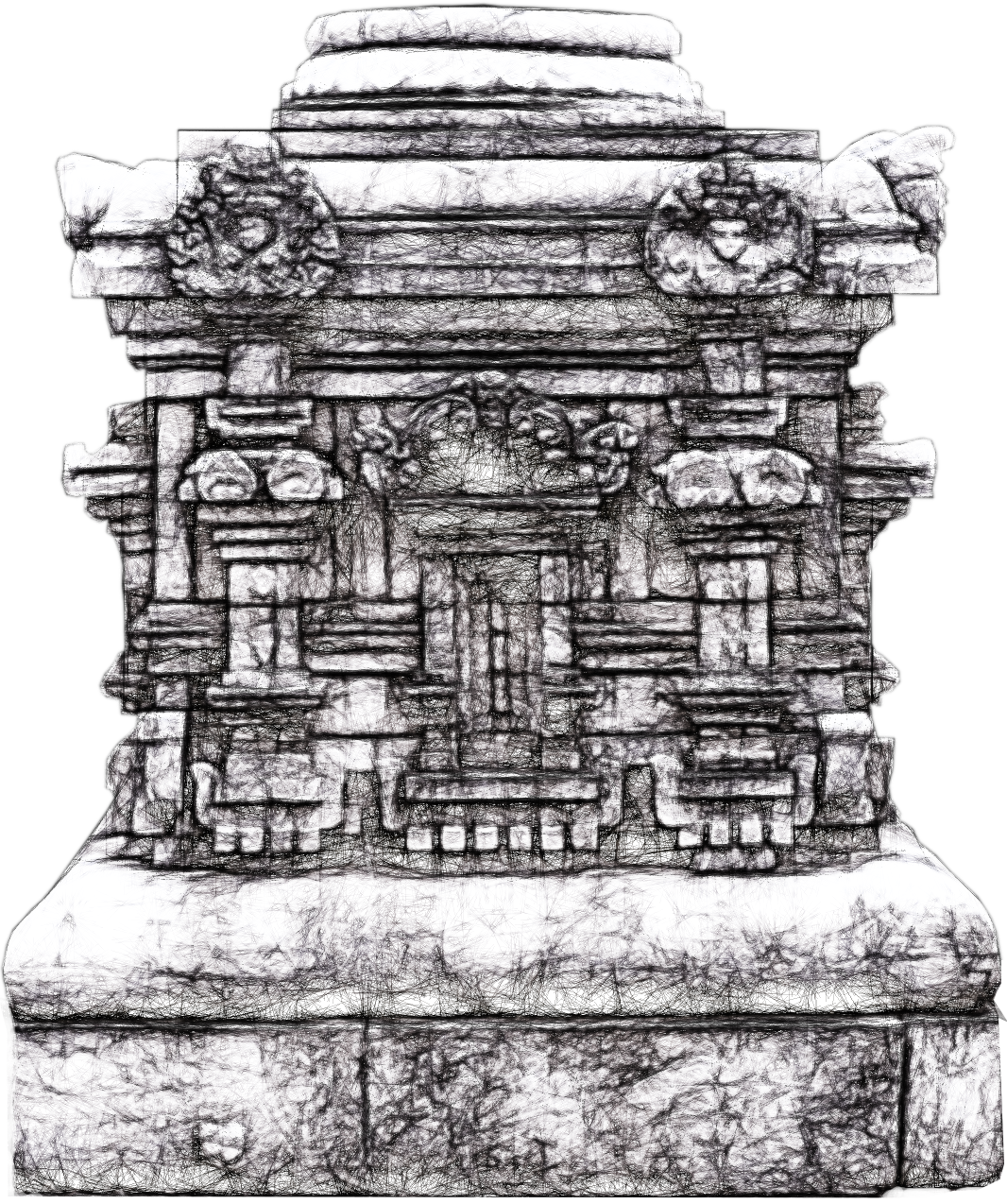

Silent Stones as a project was conceived around 1995. The objective was to photograph a few temples of Kerala, remarkable for their architecture, sculptures, murals, etc., and make them available to the world through the nascent World Wide Web as 'snapshots in time'. Modern building materials were slowly making their way into these temples, replacing natural materials like wood, bricks, and granite, altering their centuries-old look and feel. Garish paint, exposed electrical wiring, and glaring lights were defacing these structures. New constructions were also disrupting their original, harmonious layouts.
This situation prompted the initiation of Silent Stones — to document these marvelous houses of gods before they vanished or underwent irreversible changes.
My sister, Dr Mala Ranganathan, a dancer, was researching Mohiniyattom. Her work required visiting many forgotten temples in Kerala and Tamil Nadu to locate sculptural representations of this dance form. These journeys inspired me to photograph the temples and their treasures. The demanding task of travel and photography was almost entirely undertaken by my father, K. Ganapathy Iyer, a retired government officer and civil engineer. Covering approximately two hundred temples took nearly two decades.
Permissions were hard to obtain, especially for interior photography, unlike the ease with which wedding shoots were approved. Finding the temples without digital maps and coordinating visits without cell phones added to the challenges. Often, photography was restricted to the harsh light of the afternoon after morning poojas. Despite all odds, over twenty years, we documented nearly two hundred temples. We make no claim to exhaustive coverage or superior photography, but Silent Stones offers a modest glimpse into how our temples once were.
The project first went online in 2001 under the name 'Pradakshina'. As with many passion projects, time constraints have made frequent updates difficult.